Stable in Name Only? Ranking the USD-Pegged Tokens That Matter Most to American Crypto Holders
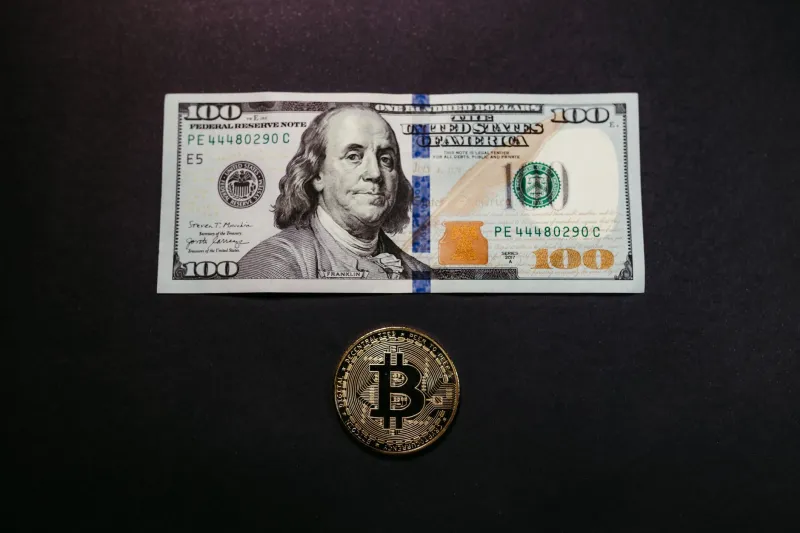
The word "stable" carries considerable weight in financial markets. When applied to cryptocurrency, however, it has historically functioned more as aspiration than guarantee. The collapse of TerraUSD in May 2022 erased tens of billions of dollars in value within days, delivering a painful lesson that peg mechanisms and marketing language are not interchangeable with genuine backing. As 2024 progresses, American investors and traders operating across decentralized finance platforms face a more crowded stablecoin landscape than ever — and the stakes for choosing wisely have never been higher.
This evaluation focuses on the stablecoins most relevant to U.S.-based participants: USDC, USDT, and PYUSD. Each occupies a distinct position in terms of reserve transparency, regulatory standing, and real-world usability within DeFi ecosystems.
The Reserve Question: What Actually Backs Your "Dollar"
The foundational promise of any fiat-collateralized stablecoin is straightforward — for every token in circulation, a corresponding dollar (or dollar-equivalent asset) sits in reserve. The degree to which issuers honor that promise, and more importantly, demonstrate it through verifiable attestations, separates credible stablecoins from those operating on faith.
USDC, issued by Circle and co-founded with Coinbase under the Centre Consortium framework, has long positioned itself as the compliance-forward alternative in the stablecoin market. Circle publishes monthly reserve attestations conducted by Grant Thornton and, more recently, Deloitte, offering U.S. investors a degree of third-party verification that many competitors avoid. USDC reserves are held predominantly in short-duration U.S. Treasury securities and cash deposits at regulated financial institutions. The temporary depeg event in March 2023 — triggered by Circle's exposure to Silicon Valley Bank — served as a stress test that ultimately reinforced confidence when the Federal Reserve backstopped uninsured deposits. USDC recovered its peg within days. For American DeFi participants who prioritize regulatory alignment and institutional-grade transparency, USDC remains the benchmark.
USDT, issued by Tether Limited, is the largest stablecoin by market capitalization globally and commands enormous liquidity across virtually every major exchange and DeFi protocol. That liquidity advantage is real and functionally significant — tight spreads, deep order books, and near-universal acceptance make USDT operationally convenient. Yet Tether's reserve composition has been a persistent source of controversy. Historically, a meaningful portion of Tether's reserves consisted of commercial paper and other non-cash equivalents, prompting a 2021 settlement with the New York Attorney General's office over alleged misrepresentations. Tether has since reported a shift toward U.S. Treasury holdings and published quarterly attestations, but these remain attestations rather than full audits, and the firm operates outside the direct supervisory reach of U.S. regulators. For risk-conscious American investors, USDT's liquidity premium comes bundled with counterparty opacity that warrants careful consideration.
PYUSD, PayPal's entry into the stablecoin space launched in August 2023 and issued through Paxos Trust Company, represents a structurally different value proposition. Paxos is a New York-regulated trust company subject to oversight from the New York Department of Financial Services, and PYUSD reserves are held in U.S. dollar deposits and short-term Treasuries with monthly attestations published by accounting firm WithumSmith+Brown. The regulatory pedigree here is arguably the strongest of the three, given Paxos's direct state-level supervision. PYUSD's primary limitation at this stage is adoption — its market capitalization and DeFi integration remain modest compared to USDC and USDT, constraining its utility for traders who depend on deep liquidity.
Regulatory Positioning in an Evolving U.S. Framework
The regulatory environment surrounding stablecoins in the United States is in active flux. Congressional efforts to establish a federal stablecoin framework have advanced and stalled repeatedly, leaving issuers navigating a patchwork of state money transmission licenses, NYDFS oversight where applicable, and increasing scrutiny from the Securities and Exchange Commission and the Treasury Department.
This uncertainty affects each issuer differently. Circle has actively lobbied for federal stablecoin legislation and has structured its operations in anticipation of formal regulatory requirements, including pursuing a national bank charter. Tether, incorporated in the British Virgin Islands and operating offshore, faces a fundamentally different compliance calculus — one that may become increasingly problematic if U.S. legislators enact strict residency or licensing requirements for stablecoin issuers serving American users. Paxos and PYUSD sit in the most clearly defined regulatory position today, though PayPal's broader consumer finance obligations add a layer of institutional accountability that smaller issuers lack.
For American DeFi participants, regulatory positioning matters not merely as an abstract compliance concern but as a practical risk factor. A stablecoin whose issuer faces enforcement action, loses banking relationships, or becomes inaccessible to U.S. users due to regulatory developments could create significant disruption to positions built around that asset.
Real-World Utility Across DeFi Protocols
Beyond reserve quality and regulatory standing, the practical utility of a stablecoin within DeFi ecosystems determines its day-to-day value for active participants. Liquidity depth, protocol integration, and cross-chain availability all factor into this assessment.
USDT currently leads on raw liquidity and is deeply embedded in centralized exchange infrastructure, making it the dominant choice for traders who move frequently between centralized and decentralized venues. USDC holds a strong position across major DeFi protocols on Ethereum and has expanded aggressively across Layer 2 networks including Arbitrum, Base, and Optimism — networks that have become central to cost-efficient DeFi activity for U.S. users. Circle's Cross-Chain Transfer Protocol (CCTP) has further enhanced USDC's interoperability, addressing one of the persistent friction points in multi-chain DeFi participation.
PYUSD, while growing, remains primarily relevant to PayPal's existing consumer base and has yet to establish the DeFi protocol depth that would make it a primary choice for sophisticated on-chain users.
A Practical Framework for American Investors
Selecting a stablecoin is not a single decision but a contextual one that should account for the specific use case at hand. For long-term capital preservation within DeFi — collateral positions, yield-generating strategies, or liquidity provision — reserve transparency and regulatory standing argue strongly in favor of USDC or PYUSD. For active trading that demands maximum liquidity and minimal slippage across centralized and decentralized venues, USDT's market depth remains difficult to ignore, provided the user has honestly assessed and accepted the associated counterparty considerations.
What no American crypto participant should do is treat any stablecoin as equivalent to an FDIC-insured bank deposit. These instruments carry issuer risk, smart contract risk, and regulatory risk — all of which can materialize rapidly under adverse conditions.
The stablecoin landscape of 2024 is meaningfully more mature than it was two years ago. Reserve standards have improved, regulatory scrutiny has sharpened issuer behavior, and the catastrophic failures of algorithmic alternatives have reinforced the case for fiat-backed models. That progress is real. But maturity is not the same as safety, and the due diligence responsibility ultimately rests with the individual holding these assets.