The Hidden Price of Holding Your Own Keys: A Sober Look at Self-Custody Costs
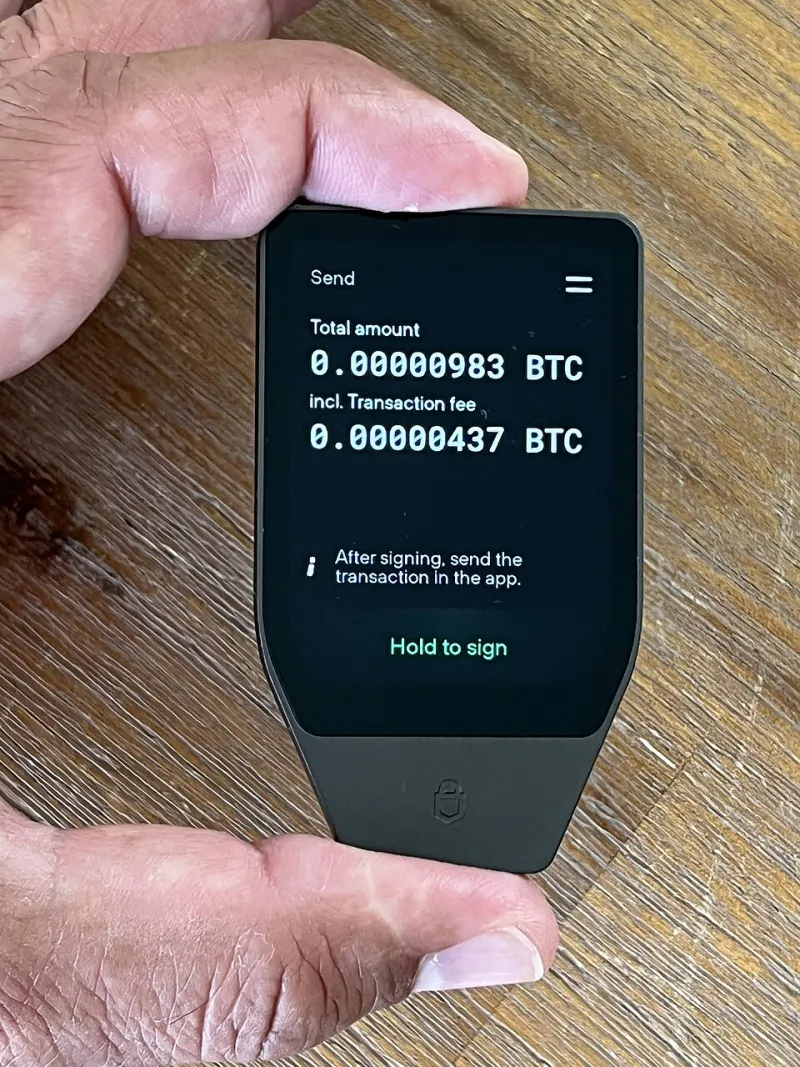
Photo: FlippyFlink, CC0, via Wikimedia Commons
The phrase "not your keys, not your coins" has achieved near-scriptural status in American cryptocurrency circles. Following a string of high-profile exchange collapses — most notably the FTX implosion in late 2022 — the movement toward self-custody accelerated sharply. Hardware wallets sold out. Seed phrase storage products flooded the market. A generation of retail holders embraced the philosophy that sovereign control over digital assets was not just prudent, but morally necessary.
Yet for all its ideological appeal, self-custody carries a set of financial liabilities that rarely surface in the communities promoting it. The costs are real, they compound over time, and in certain scenarios, they dwarf the fees charged by reputable institutional custodians. Understanding those costs does not require abandoning the self-custody model — but it does require approaching it with clear eyes.
What Self-Custody Actually Demands
At its most basic level, self-custody means holding the private keys to your cryptocurrency without relying on a third party to safeguard them on your behalf. In practice, this typically involves a hardware wallet, a securely stored seed phrase, and a set of operational habits designed to prevent unauthorized access.
The upfront expenses are modest. A reputable hardware wallet retails between $79 and $250. Fireproof seed phrase storage products — steel plates, tamper-evident capsules, and similar devices — add another $30 to $150. For most retail holders, the initial outlay is well under $500.
The hidden costs begin accumulating afterward.
The Insurance Gap Nobody Talks About
Standard homeowners and renters insurance policies in the United States do not cover cryptocurrency losses. The Insurance Information Institute has consistently noted that digital assets fall outside the scope of conventional personal property coverage. Specialized crypto insurance products exist, but they are expensive, often capped at relatively low loss limits, and generally designed for institutional rather than retail customers.
For a holder with $50,000 or more in self-custodied Bitcoin, the absence of insurance coverage represents a meaningful unhedged risk. If a hardware device is stolen during a home burglary — and the seed phrase is stored in the same location — the loss is total and unrecoverable. No claim can be filed. No reimbursement process exists.
By contrast, qualified custodians holding assets on behalf of clients are typically required to maintain crime insurance and cybersecurity coverage. While custodial insurance does not eliminate counterparty risk, it provides a financial backstop that self-custody structurally cannot replicate.
Recovery Failures: The Statistics Are Uncomfortable
Cryptocurrency analytics firm Chainalysis has estimated that somewhere between 17% and 23% of all Bitcoin in existence is likely permanently inaccessible — lost to forgotten passwords, destroyed hardware, misplaced seed phrases, and deceased holders who never established recovery procedures. That represents hundreds of billions of dollars in value that has effectively been removed from circulation.
These are not edge cases. They are the predictable outcome of placing sole responsibility for cryptographic key management on individuals who may lack the technical background, organizational discipline, or long-term planning capacity to execute it flawlessly across years or decades.
Seed phrases written on paper degrade. Devices fail. Households move. Memories fade. The operational burden of maintaining a secure, recoverable self-custody setup does not diminish over time — it grows, particularly as portfolios appreciate and the stakes of a single procedural failure increase.
Security Vulnerabilities That Scale With Sophistication
Among technically sophisticated holders, self-custody is sometimes extended to multisignature configurations — setups requiring multiple private keys to authorize a transaction. Multisig is frequently promoted as the gold standard of personal security architecture, and for experienced practitioners, it can be.
For the majority of retail holders, however, multisig introduces complexity that creates its own failure modes. Incorrect configuration, incompatible wallet software updates, and the loss of even one key in a poorly designed scheme can render assets permanently inaccessible. Security researchers have documented cases in which holders constructed multisig setups they subsequently could not spend from, not due to theft, but due to their own procedural errors.
Phishing attacks targeting self-custody users have also grown considerably more sophisticated. Social engineering campaigns specifically designed to extract seed phrases from hardware wallet owners have proliferated, with attackers impersonating manufacturer support teams and sending fraudulent firmware update notifications. The human attack surface does not disappear when a holder removes their assets from an exchange — in some respects, it expands.
Legal Liability and the Estate Problem
Self-custody creates legal complications that extend beyond the holder's lifetime. American probate courts are increasingly encountering estates that include substantial cryptocurrency holdings with no documented recovery pathway. Executors lack the technical knowledge to access wallets. Heirs receive nothing. Assets that represented years of accumulated savings vanish into cryptographic inaccessibility.
Even during the holder's lifetime, self-custody can create legal exposure. If a self-custodied wallet is used — knowingly or unknowingly — in a transaction that later draws regulatory scrutiny, the holder bears full evidentiary responsibility. There is no institutional intermediary to absorb compliance obligations or provide transaction records. The burden of demonstrating clean provenance falls entirely on the individual.
When Institutional Custody Actually Makes Financial Sense
The calculus shifts meaningfully at higher asset values. For holders with portfolios below $10,000, the fees associated with qualified custodians — which can range from 0.5% to 1.5% of assets under custody annually — may represent a disproportionate drag on returns. Self-custody, executed carefully, may be the more economical choice at that scale.
Above $25,000, the insurance coverage, regulatory compliance infrastructure, and professional-grade security architecture offered by institutional custodians begin to represent genuine economic value. Above $100,000, the case for at least partial institutional custody becomes difficult to dismiss on purely financial grounds.
This is not an argument for returning assets to exchanges that commingle customer funds and operate without adequate reserves. The failures of FTX, Celsius, and Voyager were failures of institutional integrity, not of the custodial model itself. Qualified custodians — those operating under state trust charters or federal regulatory frameworks, maintaining segregated client assets, and carrying appropriate insurance — represent a structurally different proposition.
A Framework for Honest Evaluation
Rather than treating self-custody as a universal prescription, American holders are better served by approaching the question as a cost-benefit analysis specific to their circumstances. Several variables deserve explicit consideration: the total value of assets held, the holder's technical proficiency, the robustness of their documented recovery procedures, their insurance coverage gap, and the quality of their estate planning.
For holders who elect to maintain self-custody, the investment required to do it responsibly — geographically distributed seed backups, regular security audits, documented recovery procedures, and ongoing technical education — is non-trivial. That investment should be accounted for honestly, not treated as a free alternative to custodial fees.
The blockchain's promise of individual financial sovereignty is genuine and worth preserving. But sovereignty exercised carelessly is not freedom — it is exposure. The most defensible position is one built on accurate information rather than ideological momentum, and on a clear-eyed assessment of what holding your own keys actually costs.